High-throughput NaV1.9 assay to advance pain drug discovery research

CONTACT US

High-throughput NaV1.9 assays to boost screening efficiency for pain targets

Ion channels are a major class of drug targets for modulating pain transmission and controlling chronic pain. The voltage-gated sodium channel, NaV1.9, has been identified as a critical component of pain signalling. While NaV1.9 holds great promise as a non-opioid pain target, the discovery and development of new chemical entities has been hampered by the availability of robust cellular reagents suitable for high-throughput electrophysiology.

Metrion has addressed this challenge with the development of robust stably expressing NaV1.9 cell lines (human and rat) which have been validated on the QPatch 48 and Qube 384 electrophysiology platforms. This enables:

  • Stable expression ensures consistent and reproducible results: Stable expression of NaV1.9 (human and rat) means assays are more reliable, supporting high-quality screening and dependable pharmacological data.
  • High-throughput, cost-efficient screening campaigns: Critical for early-stage drug discovery.
  • Drug discovery enabled in an underexplored but clinically relevant area: Because of technical hurdles, NaV1.9 has been under-targeted despite its relevance to chronic pain. Metrion’s validated assays now make it accessible for screening, opening new avenues for novel pain therapeutics.
  • Improved translational relevance: Having both human and rat cell lines allows for cross-species pharmacology studies, improving translational relevance and supporting regulatory submissions down the line.

Our unique approach to NaV1.9 drug discovery for faster, smarter, cost-effective screening that will unlock ROI

With over a decade of electrophysiology expertise, the NaV1.9 assay, alongside Metrion’s unique combination of ion channel expertise, bespoke assays and pain research services, enables researchers to overcome traditional limitations of NaV1.9 screening, to generate reproducible and decision-ready data.

The business case is clear for organisations looking to rapidly meet project milestones and unlock ROI in pain drug discovery:

  • Shorter timelines: High-quality screening assays accelerate project milestones.
  • Lower costs: Reliable screening data to robustly support medicinal chemistry.
  • Cost-effective outsourcing: Rapid, expert data interpretation ensures confident advancement of promising compounds.
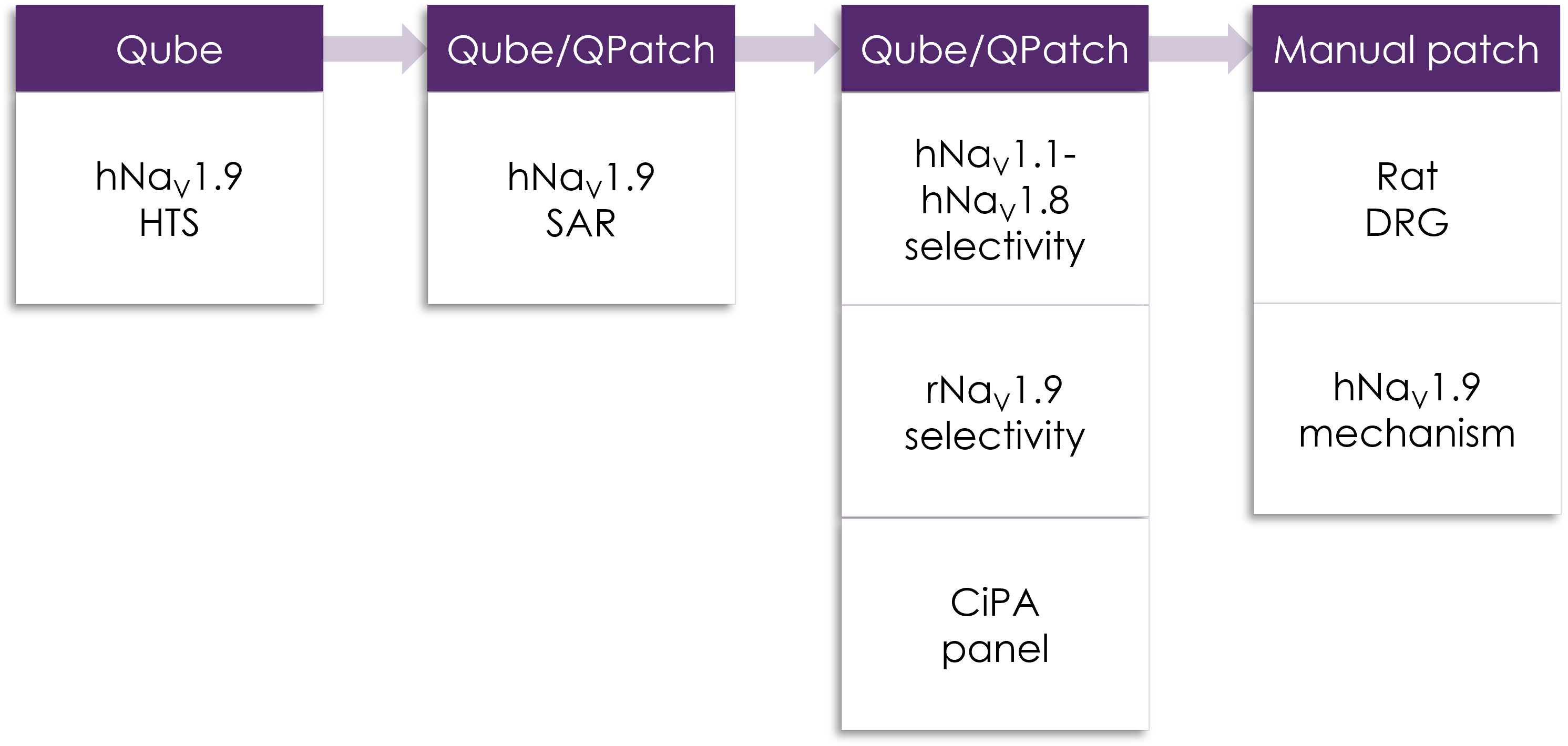
  • High confidence in NaV1.9 screening cascade (Figure 1):
    • Identify high quality hits
    • Accelerate hit-to-lead discovery
    • Investigate mechanism of action via translational assays


Figure 1. Example of Metrion's NaV1.9 screening cascade.

Let's elevate your pain drug discovery together

Need for reliable screening assays: Overcoming challenges in studying NaV1.9

Despite its importance in pain research, NaV1.9 remains one of the most difficult sodium channel targets to prosecute due to:

  • Functional expression challenges: Difficulty in expressing NaV1.9 in stable heterologous systems
  • Unique biophysical properties: Activation and inactivation kinetics of NaV1.9 require voltage-control only offered by patch clamp techniques, including automated electrophysiological systems

High quality reproducible data

Metrion has overcome these challenges by developing robust NaV1.9 cell lines which have been validated using the QPatch 48 and Qube 384 providing high quality reproducible data.

Our validated, high-throughput NaV1.9 screening solution delivers consistent and accurate results. Key advantages:

  • High-throughput NaV1.9 screening for rapid compound testing: The CHO-hNaV1.9 cell line, developed in-house by Metrion, enables automated patch-clamp screening using the Qube 384 platform. This system allows rapid testing of large compound libraries and hit-to-lead support.
  • Reliable NaV1.9 data, fewer setbacks: The stable and robust expression of Metrion’s NaV1.9 cell line ensures high reproducibility and low assay variability. We have demonstrated high sensitivity, robustness and accuracy of NaV1.9 screening data during the assay development with the testing of tool compounds and compound plates randomly spiked with a NaV1.9 inhibitor.

These enhancements place Metrion at the forefront of NaV1.9 drug discovery.

Example family of current recordings of hNaV1.9 using the Qube automated electrophysiology platform (A). Current-voltage relationship of hNaV1.9 (B).

Figure 2. Example family of current recordings of hNaV1.9 using the Qube automated electrophysiology platform (A). Current-voltage relationship of hNaV1.9 (B).

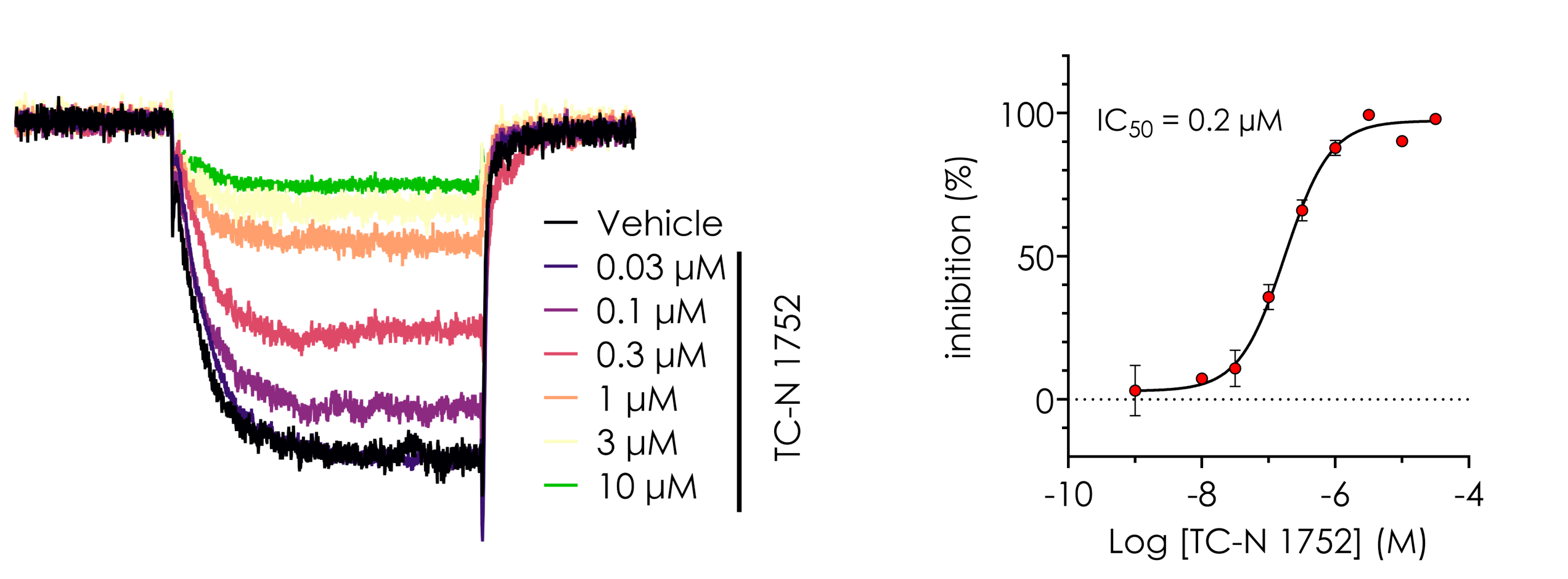
Current traces and concentration response curves for TC-N 1752, obtained using Qube 384

Figure 3. Pharmacological assessment of human NaV1.9. Current traces and concentration response curves for TC-N 1752, obtained using Qube 384.

Development of a high-throughput automated electrophysiology assay for human NaV1.9 inhibitor screening

Alex Haworth, Senior Scientist at Metrion, introduces a poster demonstrating Metrion's development of a monoclonal CHO cell line expressing hNav1.9, validated via manual and automated patch clamp techniques.

Download poster

Why researchers should choose Metrion to support their NaV1.9 programmes

Uniquely positioned as a leader in ion channel drug discovery, Metrion scientists have extensive experience in neuroscience, in particular pain, gained from both academic and industry environments.

Comprehensive suite of services lead by drug discovery experts sets Metrion apart

Alongside our highly experienced electrophysiologists, Metrion’s NaV1.9 drug discovery assays, in combination with other pain research related services, sets the Metrion offering apart from others by combining the following to support our customers’ discovery needs:

  • Leadership team with over 100 years’ experience in drug discovery research
  • High-throughput hit finding using a robust human NaV1.9 cell line
  • Assays suitable to support hit-to-lead and lead optimisation
  • Rat NaV1.9 assay for species confirmation
  • Complete panel of sodium channels for selectivity profiling including other pain targets such as NaV1.7 and NaV1.8
  • Large collection of off-target counter screens including CiPA panel for cardiac safety risk assessment
  • Access to mechanistic and translational assays using the manual patch clamp technique with rat DRG neurons
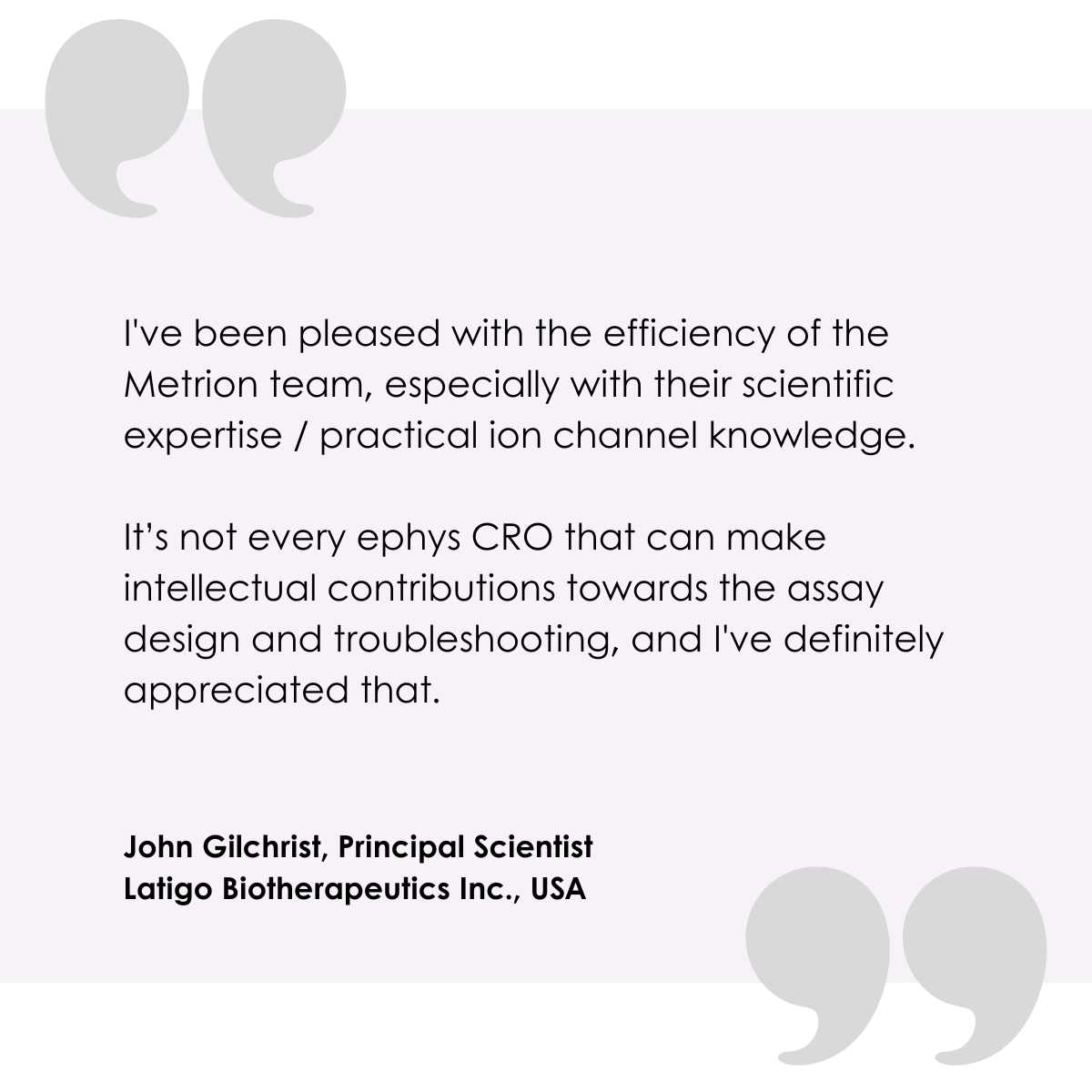
Testimonial Latigo

Apply Metrion’s expertise to your NaV1.9 research

Contact us today to learn how Metrion’s cutting-edge pain research services can help you achieve your research goals:

Understanding NaV1.9: A critical pain target

Role of NaV1.9 in sensory neurons

NaV1.9 is a voltage-gated sodium channel predominantly expressed in peripheral sensory neurons, where it plays a vital role in pain signalling. These channels contribute to the excitability of nociceptive neurons directly influencing pain pathways. The unique biophysical properties of NaV1.9 plays a key role in regulating the threshold for neuronal firing and is seen as an attractive target for non-opioid pain management.

Genetic mutations and pain disorders

NaV1.9 has been linked to various pain disorders through genetic mutations leading to both chronic pain syndromes and insensitivity to pain. These discoveries further support the significance of NaV1.9 in pain physiology and the importance of this particular sodium channel subtype as a pain target.

Advantages of automated patch clamp technology in NaV1.9 screening

Leading the way in NaV1.9 hit finding, Metrion has exceptional expertise in automated electrophysiology platforms, which delivers:

  • Greater throughput: The ability to screen thousands of compounds in a fraction of the time
  • Improved data consistency: Reduced variability and enhance reproducibility
  • Reduced timelines: Lower resource requirements with faster turnaround providing a more cost-effective programme

Let's elevate your pain drug discovery together

Contract research services for preclinical drug discovery beyond NaV1.9

Metrion continues to lead the way in ion channel research. Our NaV1.9 capabilities represent a significant advancement in pain drug discovery. By addressing key challenges associated with NaV1.9, the use of cutting-edge automated patch clamp technology and rodent translational models, Metrion is ready to support your projects to identify new pain therapies.

Beyond NaV1.9, Metrion offers an extensive portfolio of ion channel screening services, including validated assays for the full Comprehensive in vitro Proarrhythmia Assay (CiPA) panel for cardiac safety assessment: hERG, hNav1.5, hCav1.2, hKir 2.1, hKv 4.3/KChIP, hKv LQT1/minK, Late Nav1.5.

This breadth allows customers to consolidate their ion channel research needs with a single provider, streamlining project management and communication.

Frequently asked questions (FAQs)

What is the size of the NaV1.9 market?

The global chronic pain treatment market was valued at $88.2 billion in 2023 and is projected to reach $173.4 billion by 2033, growing at a 7.0% CAGR. Neuropathic pain, a major segment of this market, represents around 31.6% of the total.1

What is NaV1.9?

NaV1.9 is a voltage-gated sodium channel primarily expressed in peripheral sensory neurons. It contributes to neuronal excitability and plays an important role in pain signalling pathways, making it a promising target for non-opioid pain therapeutics.

Why is NaV1.9 considered a promising pain target?

Genetic and pharmacological studies have linked NaV1.9 to pain perception and chronic pain disorders. Modulating NaV1.9 activity may provide a route to pain relief without the liabilities associated with opioid therapies.

Why is NaV1.9 difficult to study?

NaV1.9 is challenging to express in heterologous systems and possesses unique electrophysiological properties that require specialised patch clamp techniques for accurate measurement. These challenges have historically limited high-throughput screening efforts.

What assays does Metrion offer for NaV1.9?

Metrion offers validated human and rat NaV1.9 assays using stable cell lines on automated patch clamp platforms including QPatch 48 and Qube 384, supporting hit identification, hit-to-lead optimisation and translational studies.

Can NaV1.9 assays be used for high-throughput screening?

Yes. Metrion's automated patch clamp assays enable screening of large compound libraries while maintaining the data quality required for ion channel drug discovery.

Does Metrion provide NaV1.9 selectivity profiling?

Yes. NaV1.9 screening can be integrated with broader sodium channel selectivity panels including NaV1.7, NaV1.8 and cardiac ion channels to support lead optimisation and safety assessment.

Why are both human and rat NaV1.9 assays important?

Cross-species testing can help assess translational relevance, support preclinical study design and improve confidence when progressing compounds toward development.

Neuroscience Resource Library
Evaluation of hNav1.9 Screening Cascade for Analgesic Drug Discovery

Development of a robust hNaV1.9 high-throughput screening assay on the Sophion Qube384 platform. This is complemented by a suite of ion channel selectivity assays and sensory neuron recordings to create a versatile screening cascade to support NaV1.9 drug discovery programmes.

Simultaneous assessment of current response and ΔV½ enables sensitive characterisation of KV7 modulators across screening and profiling workflows

Reliable, high-throughput KV7 assays paired with expert interpretation enable faster progression of pain and epilepsy drug discovery programmes.

VIEW ALL RESOURCES
Metrion is a contract research organisation (CRO) specialising in high-quality preclinical drug discovery services.
magnifier
linkedin facebook pinterest youtube rss twitter instagram facebook-blank rss-blank linkedin-blank pinterest youtube twitter instagram