Using Qube 384, we profiled a panel of NaV inhibitors across species, providing valuable translational insight early in analgesic drug discovery.


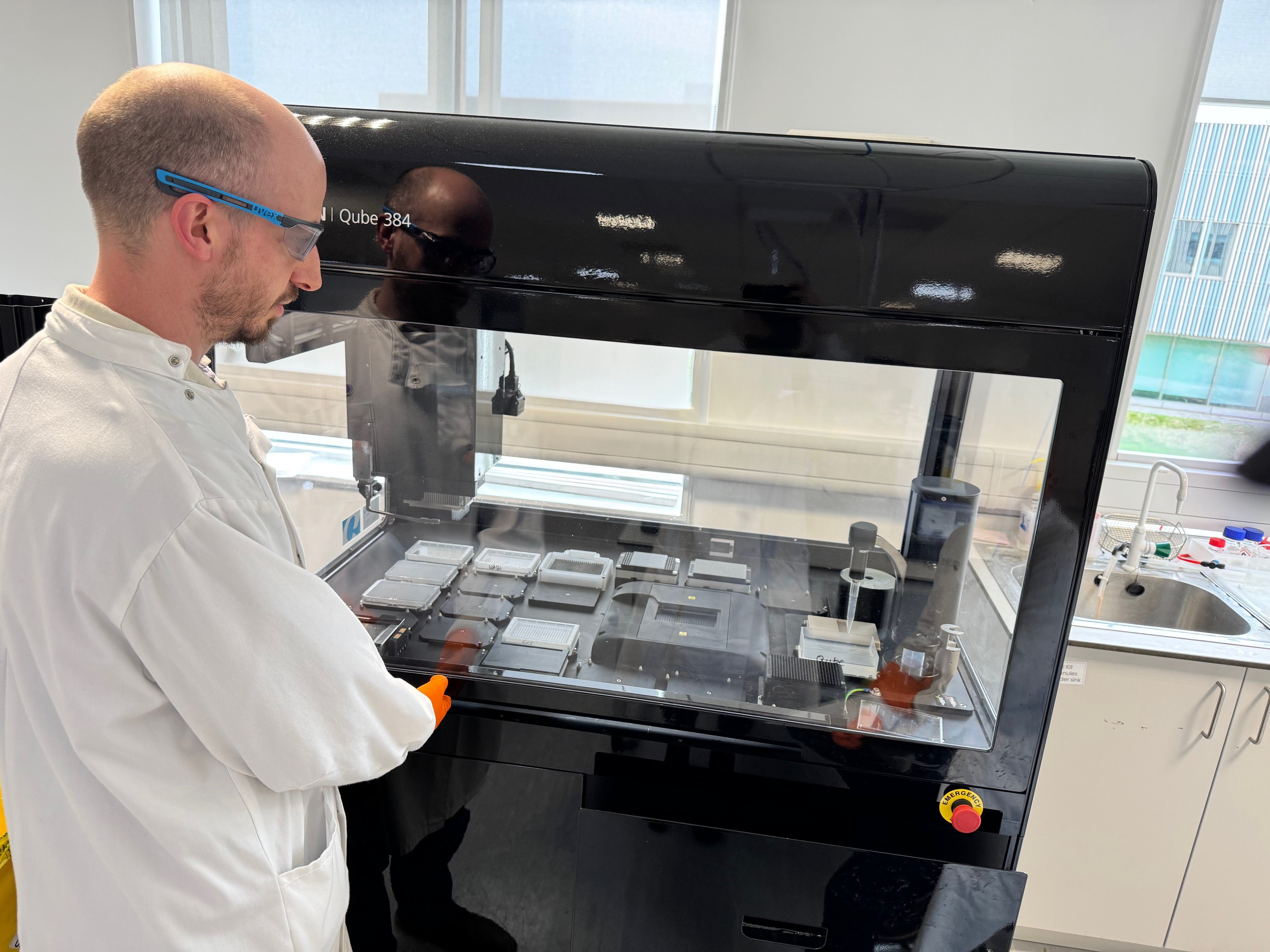 High-throughput screening (HTS) is a critical stage of drug discovery used to identify active compounds from large small molecule libraries. However, ion channel high-throughput screening can be technically challenging, with poor assay design and false positive results increasing the risk of costly downstream failures.
Metrion specialises in ion channel high-throughput screening services that combine robust assay development, fluorescence-based screening and automated electrophysiology to generate reliable, reproducible pharmacology data. Our scientists have extensive experience across a broad range of ion channel targets, enabling us to design tailored screening strategies that improve hit quality and support confident decision-making throughout the drug discovery process.
Custom cell line generation, assay development, and optimisation are also provided in-house, ensuring a seamless, integrated approach tailored to your unique programme goals.
By screening across multiple platforms, including fluorescence (FLIPR) and automated electrophysiology (Qube) instruments synergistically, we offer flexibility to progress your project as efficiently and cost-effectively as possible.
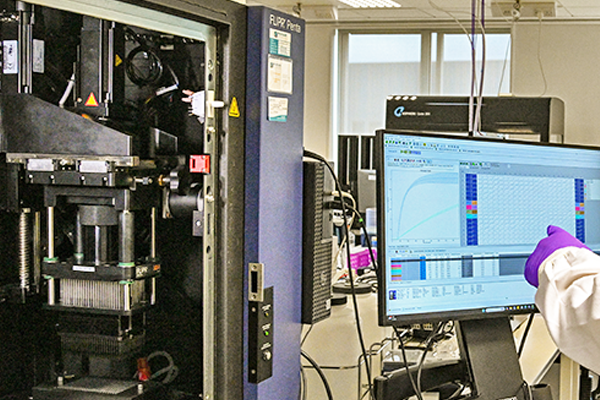 Fluorescence-based assays provide efficient and scalable approaches for primary screening campaigns and large compound library evaluation.
We develop and optimise assays including:
Using fluorescence platforms such as FLIPR, we support rapid identification of active compounds while maintaining robust assay performance and reproducibility.
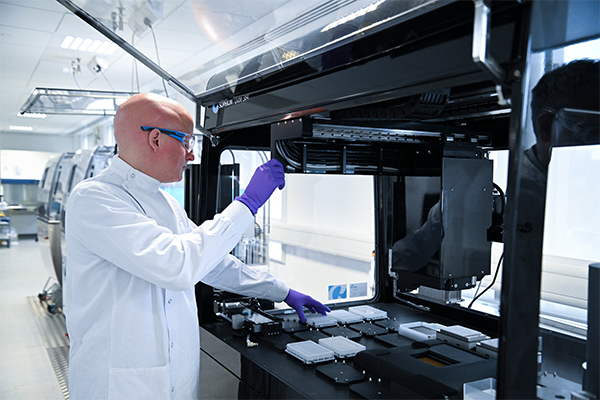 Automated patch clamp electrophysiology enables high-quality functional ion channel screening with greater throughput than traditional manual patch clamp approaches.
Using the Qube automated electrophysiology platform, we provide:
Automated electrophysiology assays help reduce false positives generated during fluorescence-based screening and provide detailed functional ion channel pharmacology data to support informed decision-making during hit validation and lead optimisation.
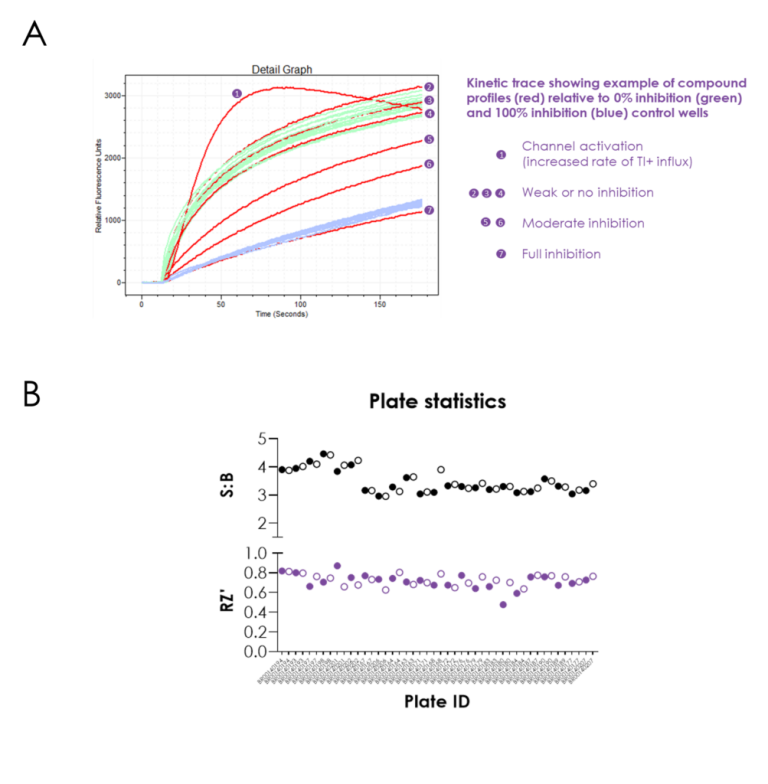
Figure 1. Screening against V434L KCNC1 using thallium flux assay. Read the drug repurposing high-throughput screeningcase study about a recent project researching a rare de novo variant in the KCNC1 gene.
To support your medicinal chemistry programmes and structure-activity relationship (SAR) studies, we offer access to Enamine's commercially available compound library.
Metrion partnered with The KCNC1 Foundation and Perlera to carry out a high-throughput screen of a drug repurposing library aimed at identifying new therapeutic uses for existing approved drugs. This approach enabled Metrion to help identify potential treatments with established safety profiles, allowing therapies to be developed faster and more cost-effectively than through traditional drug discovery methods.

Figure 2: Physico-chemical property profile of Assay.Works library according to Lipinski’s Rule of 5 (left); Prediction of compound properties and drug-like features: Colloidal Aggregation, Permeability, Bioavailability, Solubility, PAINS.

Figure 3: Assay.Works compound sets and diversity metrics based on Bemis-Murcko clusters.
High-throughput screening is a key stage in drug discovery used to rapidly evaluate large numbers of compounds against a biological target or functional assay. The goal of HTS is to identify active compounds, known as hits, which can be progressed into hit-to-lead and lead optimisation programmes.
Ion channel high-throughput screening presents unique technical challenges due to the complex biology and pharmacology of ion channel targets. Assay quality, reproducibility and false positive reduction are critical to ensuring successful screening outcomes.
FLIPR assays provide higher-throughput fluorescence-based screening, while automated electrophysiology directly measures ion channel currents and provides more detailed functional pharmacology data.
We use orthogonal screening approaches, electrophysiology confirmation assays, assay validation and expert pharmacological analysis to improve hit quality and reduce false positives.
We provide access to commercially available libraries from Enamine and Assay.Works, including diversity, focused and drug repurposing collections.
Yes. HTS platforms can support SAR studies, selectivity profiling and pharmacological characterisation during hit-to-lead and lead optimisation programmes.
Using Qube 384, we profiled a panel of NaV inhibitors across species, providing valuable translational insight early in analgesic drug discovery.
We explore hNav1.9's unique fast and slow inactivation properties using Qube 384 and QPatch 48 platforms, helping to build more predictive screening assays for state-dependent inhibitors.